The Wedding Industry Is Splitting in Two -- Which Side Are You On?
The global wedding industry is dividing into planners who compete on price and planners who command premium fees -- and the difference is not talent. It is how they protect their creative bandwidth through smarter systems.


The Best Wedding Planners Are Not the Hardest Workers
The best wedding planners in the world are not the hardest workers. They are the smartest systematizers.
That observation tends to land uncomfortably in rooms full of people who built their careers on dedication, hustle, and an almost irrational willingness to give everything to every client. But discomfort is usually a sign that something true is being said.
The global wedding industry is quietly dividing into two distinct tiers -- and the split has almost nothing to do with talent.
Tier 1 vs. Tier 2: The Divide That Is Already Happening
Tier 1 planners execute beautiful weddings. They are skilled, experienced, and deeply committed. They also compete on price, rely almost entirely on referrals, and cap out at a certain revenue ceiling no matter how hard they push. Their calendar is full, but their margins are thin and their creative energy is spent before the workday ends.
Tier 2 planners execute beautiful weddings too -- but they also have a recognizable brand, a content presence, a client profile they have intentionally shaped, and fees that reflect their positioning rather than their market's average. They attract inquiries from clients who found them, not just from couples who were told about them.
The dividing line is not talent. It is not even experience. It is systems.
What the Top Studios Around the World Have in Common
Look at the planners commanding premium fees in Lagos, and you will find studios that have structured their vendor relationships, guest coordination, and client communication into repeatable workflows. They are not reinventing the process for every wedding.
In Dubai, where multi-day celebrations with 600-plus guests are standard, the planners who scale without burning out are the ones who have removed themselves from the manual coordination layer -- RSVPs, seating logistics, guest data collection -- and replaced it with systems that run without their direct attention.
In Sydney and Mexico City, the studios generating the most editorial coverage and the highest-value inquiries are not necessarily the ones with the most years in business. They are the ones with the most clearly defined brand identity, the most consistent visual language, and -- critically -- the most available mental space to invest in that identity.
The pattern is consistent across markets. Creative bandwidth is the scarcest resource in any planning business. And the planners who protect it are the ones who win.
Where Creative Bandwidth Actually Goes
Here is an honest accounting of where a typical Tier 1 planner's week disappears.
- Chasing RSVPs across WhatsApp threads and reconciling guest data manually
- Mediating back-and-forth between the couple and vendors on details that should be self-service
- Managing invitation revisions, seating chart updates, and late dietary additions in disconnected tools
- Re-entering data that already exists somewhere, in a slightly different format
None of that is where a planner's talent actually lives. None of it builds a brand. None of it makes next year's inquiry list stronger than this year's. It just keeps the current wedding running -- and barely, at the margin.
The Tier 2 planners have largely removed themselves from this layer. They have not outsourced their taste or their client relationships. They have outsourced the repetitive operational work to systems -- and to partners who specialize in executing it well.
Systematizing the Repeatable to Differentiate on the Irreplaceable
This is not an argument for technology for its own sake. Owning a dozen SaaS subscriptions does not make a planning business more sophisticated -- it just adds more tabs to manage.
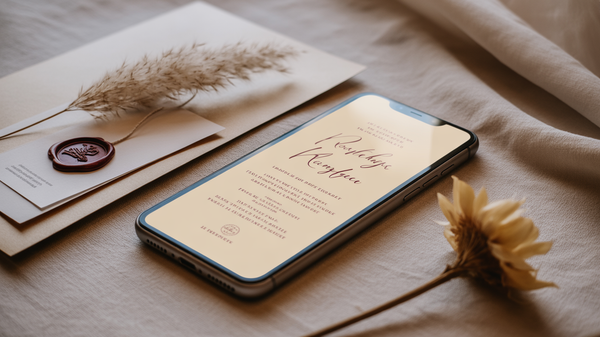
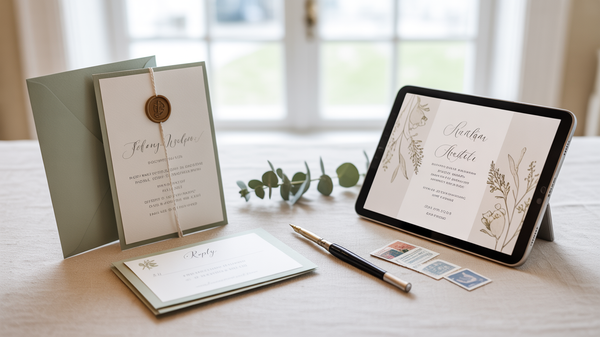
The argument is more specific: identify the parts of your workflow that are repeatable and predictable, then build or adopt systems that handle those without your direct involvement. Guest management, RSVP collection, digital invitation production and revision cycles -- these are all repeatable. They follow patterns. They can be systematized.
What cannot be systematized is your editorial eye, your vendor relationships, your ability to read a couple and understand what their wedding should feel like. That is the irreplaceable part. And right now, for most planners, it is being crowded out by the repeatable part.
The studios that will define the next generation of premium wedding planning are not the ones working the longest hours. They are the ones who have decided, deliberately, that their creative capacity is too valuable to spend on logistics.
The Question Worth Sitting With
If you removed all the manual coordination work from your last three weddings -- every RSVP follow-up, every invitation revision loop, every seating chart update -- what would you have done with that time instead?
Whatever your answer is, that is where your brand actually lives.
Wedwebs works with planners who have made that decision -- studios that want guest management and digital invitation infrastructure handled at a level of quality that matches their own, so they can put their energy into the work that no system can replicate. If you are evaluating how your operation is structured heading into 2026, we are worth a conversation.