Template vs. Studio-Designed Digital Invitations: Why the Difference Is Visible in the First Five Seconds
The gap between a template and a studio-designed digital invitation is visible the moment a guest opens the link. Here is exactly what separates them -- and why those first five seconds define your entire event.

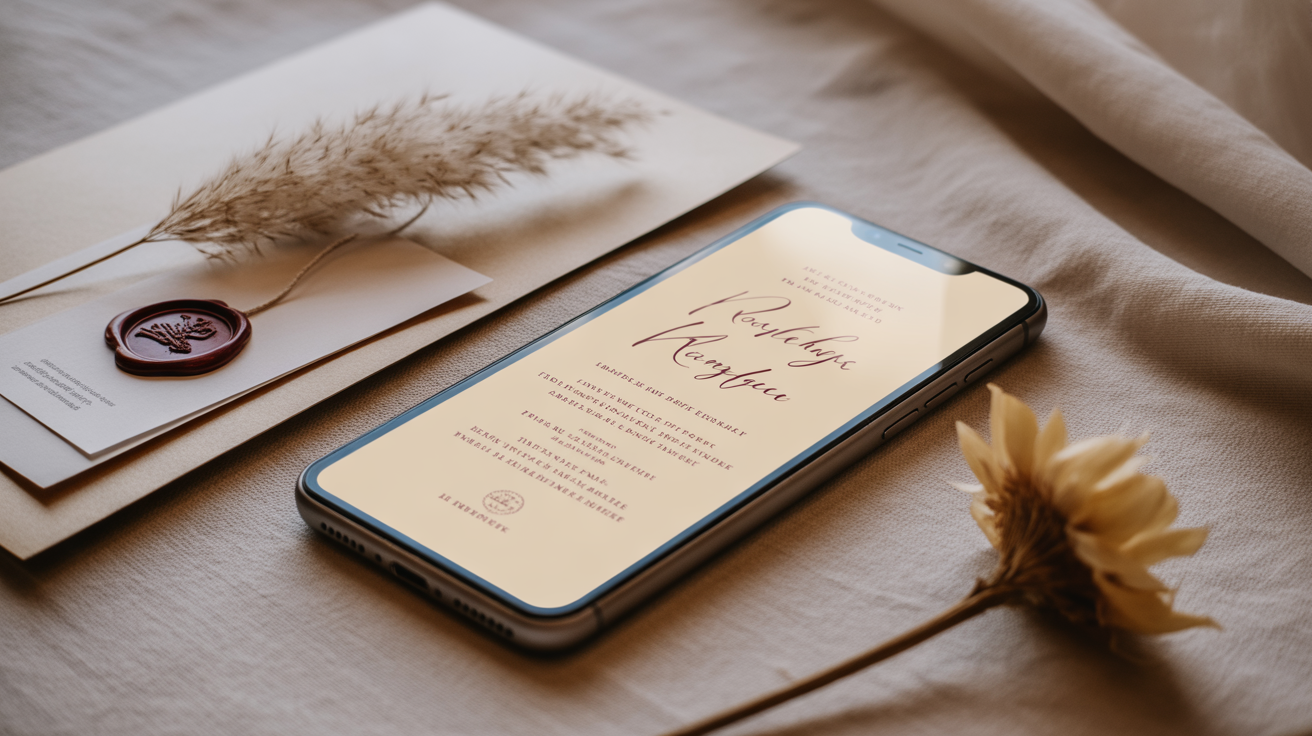
Not All Digital Invitations Are Equal
There is a version of a digital wedding invitation that looks like every other digital wedding invitation. You have seen it: the same sans-serif font stack, the same fade-in animation that pauses three beats too long, the same layout that shifts awkwardly on a phone screen. It was built from a template, and guests -- whether they can articulate it or not -- feel that immediately.
The template market exploded for an obvious reason. Platforms made it possible for anyone to build a functional digital invitation in an afternoon for under twenty dollars. Accessibility won. And for a while, the format was novel enough that execution quality almost did not matter. A digital invitation was still a digital invitation.
That window has closed.
The Template Aesthetic Is Now Recognizable
Digital invitations are no longer rare. Guests across Sydney, Dubai, Lagos, and Toronto have received dozens of them. The template aesthetic -- the recycled layout structures, the library motion presets, the color palettes that were never matched to a specific wedding -- has become instantly familiar. Familiar is the opposite of memorable. For a premium wedding, that is a problem worth taking seriously.
The couples moving away from templates are not doing so because they are trend-chasers. They are doing so because they understand what an invitation actually communicates: not just the date and venue, but the taste, the intention, and the emotional register of the entire event.
Where Studio Design Separates Itself
The differences between a template and a studio-designed digital invitation are not subtle when you know where to look.
Custom typography hierarchy is the first thing a trained eye notices. A template pulls from a fixed font library and applies a generic size ratio between the heading, names, and body text. A studio-designed invitation builds a hierarchy from scratch -- selecting typefaces that carry the right historical and emotional weight, then scaling and spacing them so the eye moves through the information in a deliberate sequence. The result is not just 'prettier.' It is legible in a different, more considered way.
Bespoke motion and animation is where the gap becomes dramatic. Template animations are functional at best -- elements that fade or slide in on a timing preset. Studio-designed motion is choreographed. A monogram that blooms on entry, florals that draw themselves across the screen, a parallax scroll that reveals the venue photography like a slow exhale. These are not decorative choices. They are pacing decisions that control how a guest emotionally enters the world of the wedding.
Cohesive color grading is the difference between a color palette and a color system. Templates offer a selection of pre-built palette options. A studio builds the color story from the actual wedding -- the linen, the florals, the venue light, the bride's chosen aesthetic -- and translates that into hex values, opacity levels, and background treatments that make every element feel like it belongs to the same world.
Responsive layout quality is the least glamorous differentiator and arguably the most consequential. Over 85% of guests open digital invitations on a mobile device. A template's layout is designed for a desktop canvas and adapted downward, often imperfectly. A studio-designed invitation is built responsively from the ground up, meaning the experience on a 375-pixel screen is as considered as it is on a 1440-pixel one.
The Five-Second Rule
Here is what no one says plainly enough: a guest forms their emotional expectation for your entire wedding in the first five seconds of opening your invitation link. Before they read the date, before they RSVP, before they think about what to wear -- they have already felt something.
A template says: this is a well-organized event. A studio-designed invitation says: this is an experience you are being invited into.
That distinction shapes how guests show up -- how they dress, how they talk about it beforehand, how much anticipation they carry through the door. The invitation is not pre-event collateral. It is the first room of the wedding.
Controlling what happens in those five seconds is not possible with a template. A template was designed for someone else's wedding, adapted for yours. A studio-designed invitation is built only once, for only you, and it shows.
If you are thinking about what that looks like for your wedding, Wedwebs would love to walk you through the studio process -- starting with the design conversation, not a dropdown menu.