Earthy Maximalism Is the Defining Wedding Palette of 2026 -- Here Is Why It Works So Well in Digital Design
Earthy maximalism is the defining wedding aesthetic of 2026, and it is uniquely suited to digital invitation design. Here is the cultural context behind the shift -- and why the palette sets a sensory promise that should carry through every touchpoint of the day.

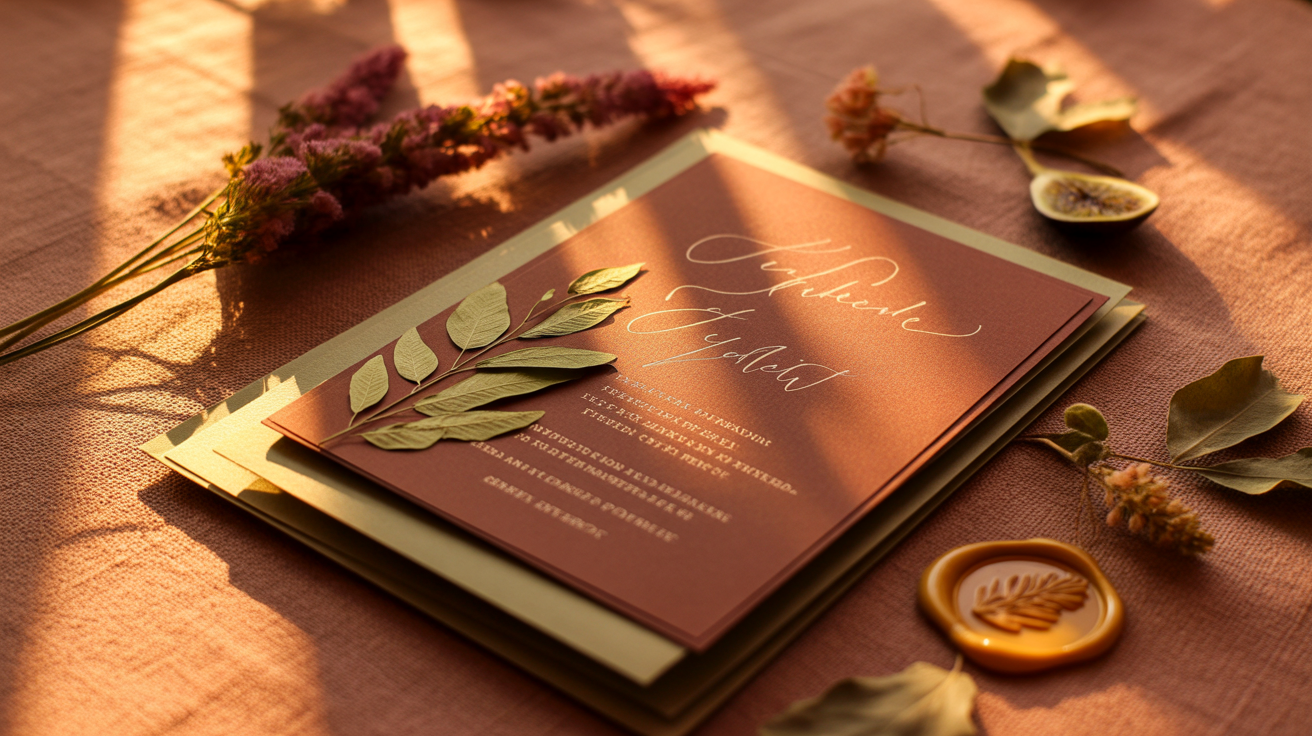
Dusty Rose Had Its Moment. Step Aside.
Let us be direct: dusty rose and sage were beautiful, and they are done. The aesthetic that defined weddings through the early 2020s -- that soft, desaturated, neutral-everything sensibility -- has run its course. What is replacing it is not a gentle evolution. It is a full-throated correction.
2026 belongs to earthy maximalism. Terracotta pushed to its deepest warmth. Burnt sienna that reads almost like polished copper. Deep olive so saturated it feels borrowed from an Italian hillside at dusk. Warm ochre layered against rough-woven linen and dried botanical arrangements that take up real space. This is not a trend report. This is a declaration.
Why This Shift Is Happening Right Now
The cultural forces behind earthy maximalism are not subtle. Three things are converging at once.
The first is the influence of global travel aesthetics returning to design consciousness. Couples who spent years saving and dreaming are now pulling reference from Moroccan riads, Turkish kilim patterns, Andalusian courtyards, and the terracotta architecture of West African markets. These references carry warmth, history, and material weight -- qualities that the millennial minimalism era actively suppressed.
The second is the resurgence of handcrafted texture in luxury design broadly. In fashion, in interiors, in editorial photography, there is a collective hunger for things that look made -- not manufactured. Visible brushstrokes, pressed botanicals, uneven ink coverage, wax seals that are slightly imperfect. Earthy maximalism is the palette that accommodates texture without fighting it.
The third is a generational shift in what brides want from warmth. The 2020s bride wanted warmth through neutrals. The 2026 bride wants warmth through richness. She is not choosing between color and sophistication -- she is rejecting the premise that she has to.
Why Earthy Maximalism Is Made for Digital Invitation Design
Here is where the conversation gets genuinely interesting, because earthy maximalism does something on screen that it struggles to do on paper.
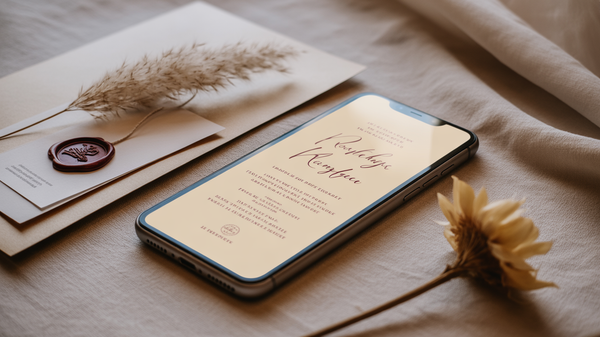
Rich, deeply saturated backgrounds -- think a full-bleed burnt sienna or a dark olive with warm undertones -- absorb digital light in a way that feels immersive rather than harsh. On a printed card, that same depth risks reading as heavy or ink-dense. On a screen, it glows. The medium itself becomes a collaborator.
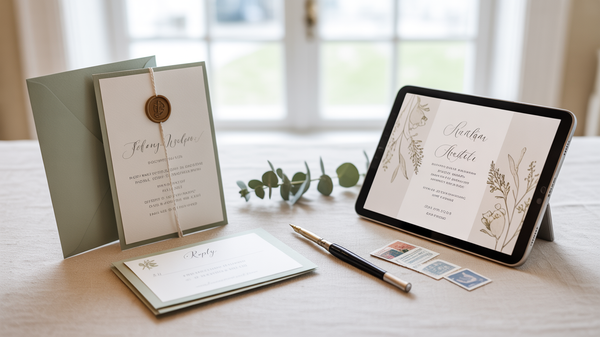
Layered botanical motifs work the same way. A hand-illustrated arrangement of dried grasses, preserved fig leaves, and trailing amaranth can be built with depth and translucency on a digital canvas -- foreground, midground, background -- creating a sense of dimensionality that a flat printed surface cannot achieve without significant production cost. The detail lands at every screen size, from a 6-inch phone to a desktop browser.
Gold foil-style typography is perhaps the clearest example. On paper, actual foil requires a specialist printer, specific paper weights, and a budget line that most couples do not anticipate. In a digital invitation designed with intention, that same gold -- warm, metallic, slightly imperfect at the edges -- renders with full fidelity on any device. The craft read is identical. The production constraint is gone entirely.
What this means in practice: earthy maximalism is not a palette that compromises in the transition from concept to digital delivery. It arrives intact.
The Invitation as the First Chapter of a Sensory Story
This is the part that matters most, and it is the part that often gets missed in conversations about digital invitation design.
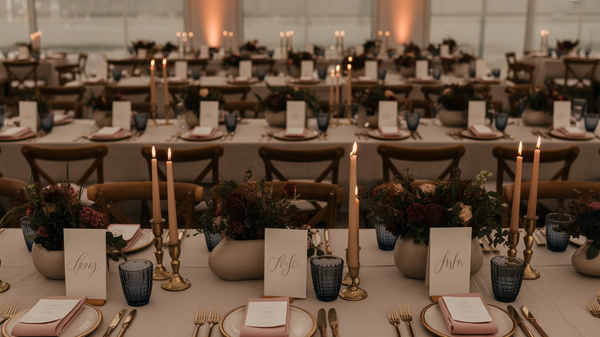
The invitation is not administrative. It is not the logistics document dressed up nicely. It is the first design touchpoint in a complete sensory experience, and everything that follows -- the florals, the tablescapes, the welcome signage, the ceremony arch, the stationery suite at the venue -- should feel like a continuation of what the guest first encountered on their screen.
When a guest opens a digital invitation built in deep terracotta with layered botanical detailing and warm ochre typography, they are receiving a promise. They are beginning to feel the temperature of the day before they have checked their calendar. If they arrive at the venue and find dusty pink peonies and white linen, the sensory contract has been broken -- not catastrophically, but noticeably. The coherence is gone.
Earthy maximalism, executed well in the digital invitation, sets an expectation of richness, texture, and intentionality that a thoughtful WO can carry through every physical touchpoint. That is not a small thing. That is the difference between a wedding that feels designed and one that merely looks assembled.
If you are building a wedding aesthetic in this direction -- or advising a bride who is -- explore what the Wedwebs design portfolio looks like when earthy maximalism is the brief. The conversation is worth having early.