
The Guest Attendance Data Your Competitors Are Already Using (And You Are Probably Ignoring)

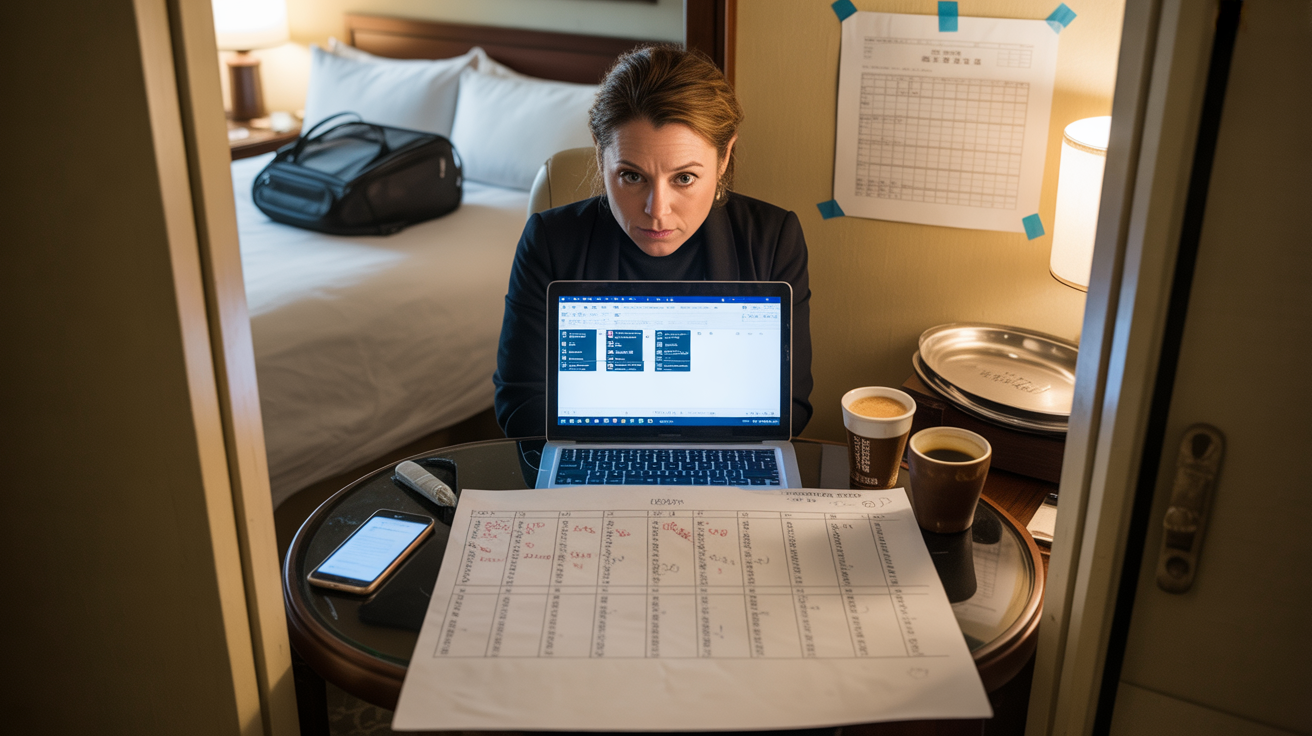
You Think You Know Your Guests. The Data Disagrees.
You have run enough weddings to feel confident reading a room before it fills. You know the table dynamics, you know which families travel far, and you know roughly how many RSVPs will quietly evaporate before the event day. That instinct took years to build. The problem is that instinct is not a system, and right now, a small group of Wedding Organizers are making decisions based on behavioral data that your gut feeling simply cannot compete with.
This is not a criticism of your experience. It is a description of a knowledge gap that is quietly costing you precision, margin, and reputation on every event you run.
The Patterns Hidden Inside Your RSVP Data
Most Wedding Organizers treat RSVP tracking as a headcount exercise. You collect the yes or no, you update the catering number, you move on. But inside a properly structured digital guest management system, RSVP responses carry a layer of behavioral signal that the spreadsheet version destroys completely.
Here is what structured digital tracking actually reveals over time:
- Response velocity: guests who confirm within 48 hours of receiving a digital invitation attend at a significantly higher rate than late responders. Late confirmations, especially those arriving in the final 10 days, carry a dropout risk that experienced WOs chronically underestimate.
- Dietary change frequency: guests who submit a dietary preference at RSVP stage and then modify it once are statistically more likely to modify it again closer to the event. A single data point looks like a preference. A pattern across your event portfolio looks like a workflow risk.
- Plus-one conversion rates: the gap between 'attending with guest' confirmations and actual plus-one arrivals is consistently wider than WOs budget for. Without event-level data logged against a central guest record, you are recalibrating this number from memory every single time.
- Geographic clustering and no-show correlation: guests traveling internationally or more than a certain distance threshold show predictable cancellation spikes in the 72-hour window before the event, often tied to travel disruption. This is plannable if you have the historical data. It is a crisis if you do not.
None of this is visible in a WhatsApp thread or a colour-coded Excel tab. It requires a system that logs, timestamps, and connects guest behaviour across every event you manage.
The Cost of Operating Without This Layer
The immediate cost is operational. You are over-ordering or under-preparing on catering minimums, you are misjudging seating buffer requirements, and your venue coordinator relationships take the friction when the numbers shift late. These are margin problems disguised as logistics problems.
The deeper cost is competitive positioning. When a potential client compares WOs during the selection process, the organizer who can say 'based on 40 events of tracked data, here is how we plan for your guest profile' is speaking a completely different language from the one relying on experience alone. One of those conversations closes faster and at a higher rate.
What a Digital Infrastructure Layer Changes
Wedwebs exists at this exact intersection. The platform is not a cosmetic upgrade to how you send invitations. It is a data infrastructure layer that captures guest behaviour from the first interaction with a web-based digital invitation through to final attendance, feeding that information into a centralised system your entire operation can act on in real time.
The design and dispatch of the digital invitation itself, including the revision-heavy, detail-obsessed process that typically consumes hours of your time mediating between the bride and a designer, is handled directly by the Wedwebs team. We absorb that friction entirely, functioning as an extension of your operation rather than another vendor you have to manage. Your involvement ends at the brief. The data collection begins the moment the first guest opens the link.
Over successive events, that data compounds. You stop estimating and start forecasting.
The WO Who Runs on Evidence
The most effective version of your business is not more hours or more staff. It is better information arriving earlier. A bride experiencing a seamless, professionally executed guest journey is the output. The input is a WO who built the system underneath it before the wedding week began.
If you want to understand how Wedwebs integrates with your current workflow and what your existing event data could look like inside a structured system, the conversation starts at wedwebs.com.