How to Build and Manage Your Wedding Guest List: A Complete Guide
A structured, zero-fluff guide to managing your wedding guest list from scratch -- covering priority tiers, venue capacity rules, B-list diplomacy, and RSVP follow-up cadence. Useful enough for first-time couples, detailed enough for experienced planners to bookmark.


Every Wedding Guest List Starts as a Dream and Ends as a Negotiation
The dream version is easy. You picture everyone you love in one room. The negotiation comes when that room has a 120-person capacity, your combined family alone numbers 140, and your partner's colleagues are expecting invitations. This guide walks you through the full lifecycle of a wedding guest list -- from the first brainstorm to the final headcount -- with specific frameworks that keep the process structured and the relationships intact.
Step 1: Build Your Master List Without a Filter
Before you set any limits, write everyone down. No editing, no justifying, no 'well, we have to invite them.' Just names. Organize them into these starting categories:
- Immediate family (parents, siblings, grandparents)
- Extended family (aunts, uncles, cousins)
- Close friends (people you speak to regularly)
- Peripheral friends (people from a specific chapter of your life)
- Colleagues (current and former)
- Partner's equivalent of all the above
- Plus-ones for coupled guests
- Children
Most couples end up with a master list between 180 and 280 names before any cuts. That number is not your problem yet. It is just your honest starting point.
Step 2: Apply the 3-Tier Priority System
Once the list exists, assign every name a tier. This is the framework that turns an emotional exercise into a manageable one.
Tier 1 -- Must Invite: Your absence at their wedding (or theirs at yours) would genuinely damage the relationship. These are non-negotiable. For most couples, this is 40 to 70 people.
Tier 2 -- Would Love to Include: People you care about and want there, but the relationship survives if logistics prevent it. This tier is where your real guest count lives.
Tier 3 -- Obligation or Courtesy: Work contacts, neighbors, distant relatives you have not seen in years. These names are the first to come off the list when the venue cap demands it.
Do this tiering independently -- you and your partner each assign tiers without discussing first. Then compare. The names you both placed in Tier 1 are locked. Everything else becomes a conversation.
Step 3: Apply the 80% Rule to Your Venue Capacity
Here is a number that saves more weddings from chaos than any other: never plan your guest list to exactly match your venue's stated capacity.
Venue capacities are fire-code maximums, not comfort targets. A 200-person venue at full capacity means tight chair spacing, long buffet queues, and a dance floor no one actually uses. Plan for 80% of your venue's capacity as your working target. A 200-person venue comfortably hosts 160 guests. A 120-person venue is designed for 95.
This 20% buffer also absorbs something real: late RSVPs, guests who add a plus-one after submission, and last-minute additions from the B-list (more on that in a moment). Build the buffer in from the beginning.
Step 4: Handle the B-List With Dignity
A B-list is not something you hide -- it is a standard practice that most experienced couples use. The key is execution.
Send Tier 1 invitations first, at least 10 to 12 weeks before the wedding. As declines come in, you have a window to extend invitations to Tier 2 names without those guests ever knowing they were second in sequence. The protocol:
- Keep your B-list ordered and ready before Tier 1 invitations go out
- Send B-list invitations no later than 6 weeks before the wedding -- anything closer feels rushed and can embarrass the guest
- Keep the tone warm and straightforward ('We would love for you to join us') -- no over-explaining
What you never do: tell a Tier 2 guest they are on the B-list. That information helps no one.
Step 5: Track RSVPs With a Single Source of Truth
The place where guest lists collapse is RSVP tracking. Responses come in through the wedding website, WhatsApp messages to your mother, email replies to your partner, verbal confirmations at a dinner party, and a voicemail from someone's aunt. Within two weeks, you have contradictory data and no reliable headcount.
The fix is structural, not motivational. You need one system that every response feeds into:
- A digital RSVP form on your wedding website captures the clean data
- All verbal and message-based confirmations get manually entered within 24 hours
- One person owns the master file -- not both of you, not your mum, one designated person
- The headcount number shared with your caterer and venue comes only from this source
If you are working with a Wedding Organizer, this system should live with them. If you are self-planning, a well-structured spreadsheet with columns for name, tier, invitation sent date, RSVP status, meal preference, and dietary restrictions covers everything you need.
Step 6: The 2-Week RSVP Follow-Up Cadence
Set your RSVP deadline 3 weeks before the wedding. This gives you a real buffer before you need to submit final numbers to your venue and catering team, which typically requires 10 to 14 days notice.
Follow this cadence after invitations go out:
- Week 1 post-invitation: No follow-up. Let the invitation breathe.
- 2 weeks before RSVP deadline: Send a polite, friendly reminder to non-responders.
- RSVP deadline: Close the formal channel. Move outstanding guests to a personal follow-up list.
- 48 hours after deadline: One personal message or call to remaining non-responders. Keep it light.
- Final headcount submitted: Anyone who has not responded by the time you submit is counted as a 'no' for catering purposes. You can always add a seat -- removing one is harder.
This cadence keeps you from chasing people daily, which is exhausting, and from waiting indefinitely, which is operationally dangerous.
Step 7: Managing Last-Minute Changes Without Chaos
Every wedding has them: the guest who RSVPs yes and cancels the week before, the distant cousin who shows up unannounced, the plus-one who changes three times. These are not failures in your planning -- they are a normal friction surface you can design around.
Build a 'flex reserve' of 3 to 5 seats into your final catering number beyond your confirmed headcount. This is not waste -- it is operational cushion that costs less than the stress of emergency reconfiguration.
For day-of additions, your venue coordinator and catering manager should both know there is a small flex reserve. They expect it. What they cannot work with is a surprise 15-person group that arrives unannounced -- so the line between manageable and chaotic comes down to communication in the final 72 hours.
The System Makes the Experience
A wedding guest list is ultimately a logistics document that carries a lot of emotional weight. The framework -- tiering, the 80% rule, a single RSVP source, the 2-week follow-up cadence -- is there to protect you from decision fatigue and last-minute panic, not to strip the warmth out of the process.
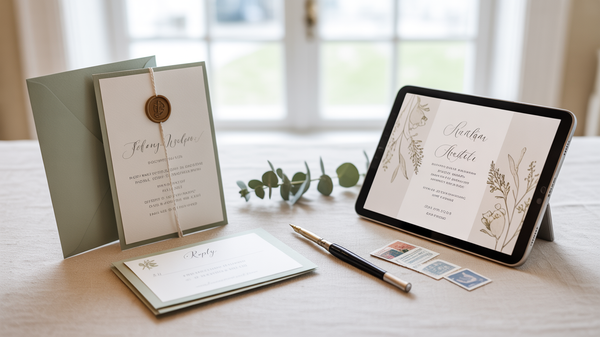
Wedwebs builds the digital infrastructure that sits underneath all of this: a personalized wedding website with integrated RSVP collection, real-time guest data, and a management dashboard that replaces the spreadsheet entirely. If you want to see how a properly designed digital invitation system handles this lifecycle from first send to final headcount, the portfolio is a good place to start.