Before and After: How Wedding Organizers Stop Being the System and Start Running One
Wedding Organizers who cannot scale are usually solving a systems problem with more staff. This piece shows the operational shift from founder-dependent coordination to data-driven infrastructure.


The Business You Built Is Holding You Hostage
It is 2:17 AM. You have two weddings running next weekend, a third couple onboarding on Thursday, and somewhere between your WhatsApp threads and four open spreadsheet tabs, a dietary update for Table 9 has gone missing. You are not behind because you are disorganized. You are behind because your business was never designed to run without you in the center of it.
This is the founder-dependency trap, and it is the single reason most talented Wedding Organizers never scale past three or four events per year. Every RSVP confirmation, every guest data update, every design revision request from a bride at midnight flows directly through you. You are not running a business. You are performing one.
The hard truth is this: hiring more coordinators does not fix a systems problem. It multiplies it.
The Real Cost of Paper-Based Coordination
When your guest management lives across printed lists, forwarded emails, and WhatsApp voice notes, every update creates a new reconciliation task. A guest changes their meal preference three days out. That single change now requires you to manually update a spreadsheet, re-notify the caterer, cross-reference the seating plan, and hope the right version reaches the right vendor in time.
Multiply that by 200 guests, across two concurrent events. The margin erosion is not just financial, it is reputational. One missed dietary flag at a high-profile wedding does not stay quiet. Your next referral depends on the event your bride experienced, and a bride who felt friction will not describe your work the way you need her to.
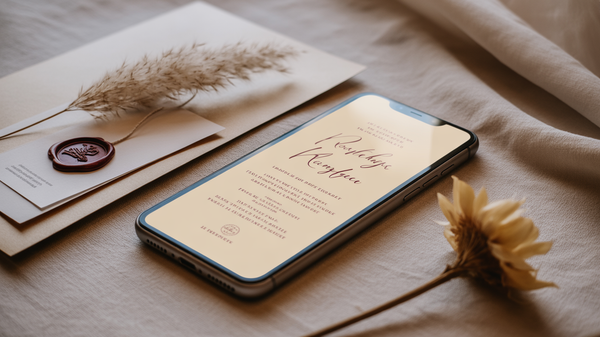
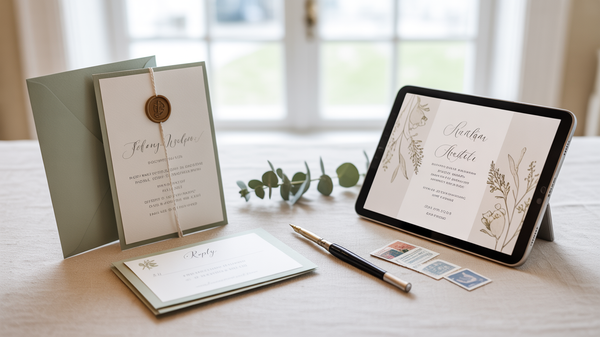
Then there is the invitation phase, which quietly destroys more WO time than almost any other stage. Brides have a vision. That vision evolves. Then it evolves again. The revision loop on a bespoke digital invitation can consume six to ten hours of back-and-forth mediation that you are effectively absorbing for free, time that should be going toward your next client acquisition or your vendor relationships.
What a System-Dependent Operation Actually Looks Like
The shift from founder-dependent to system-dependent is not a staffing decision. It is an infrastructure decision. When guest data lives in a centralized, web-based platform, the data moves instead of you moving the data.
Consider what a structured digital infrastructure changes operationally:
- RSVP responses feed directly into a live guest dashboard, with no manual entry required
- Dietary flags and accessibility notes are captured at the source and synced in real time to relevant vendor views
- Seating and table data updates cascade automatically, removing the version-control problem entirely
- Digital invitations are tracked by open rate and response status, giving you accurate headcount forecasting days earlier than paper allows
- The bride interacts with a polished, responsive digital experience that reflects your standard, without requiring your constant presence to maintain it
This is the operational difference between a business that scales and one that stalls. The data is everywhere. You do not have to be.
Where Wedwebs Absorbs the Friction You Currently Carry
The design revision bottleneck deserves specific attention because it is where most WOs silently bleed hours. Wedwebs operates as a direct extension of your team during the digital invitation phase. Bespoke requests, infinite revision cycles, demanding timelines - these route to our team, not back to your calendar. You receive a finished, approved product. The loop closes without touching your operational bandwidth.
Beyond the invitation, the Wedwebs infrastructure connects your guest data, your vendor coordination, and your event timeline into a single coherent system. When the bride calls you the morning of the wedding, she is calm. Not because everything went perfectly, but because the system caught everything before it became a problem she could feel.
A calm bride is not a lucky outcome. It is a systems outcome.
The Version of Your Business You Actually Want to Build
Scaling is not about capacity. It is about designing a business where your expertise is the differentiator and the operational machinery runs independently of your physical attention. That version of your business is available to you right now. It is a systems decision, not a hiring decision.
If you are running two or more events concurrently and still functioning as the manual sync point for guest data and vendor communication, your current workflow has a ceiling. It is worth examining where that ceiling is and whether your infrastructure is the reason you keep hitting it.
Explore how Wedwebs integrates with your existing operation at wedwebs.com. The conversation starts with your current workflow, not a sales pitch.