The 400-Guest Entrance Nobody Talks About (And Why It Ends Careers)
The chaos at a wedding entrance is never really about the entrance -- it is a structural failure that started weeks earlier. Here is how WOs are building the digital infrastructure that makes the entrance a non-event.

The Moment Everything Unravels
It is 5:47 PM. The ballroom doors open in thirteen minutes. You are standing at the entrance holding a printed spreadsheet -- four pages, landscape format, last updated three days ago -- and somewhere between page two and page three, the columns have shifted. The table numbers no longer match the names.
Your walkie crackles. The bride wants to know how many guests have arrived. You have no answer because you have no system. You have paper.
A family of seven walks in. They are not on your list. Or maybe they are, under a different spelling, or a nickname, or because someone's aunt RSVP'd on behalf of the whole side of the family over WhatsApp six weeks ago and that message is now buried under 2,400 other messages in a chat you cannot search while holding a clipboard and making eye contact with 400 people who all expect to feel welcomed.
This is not a bad day. This is a structural failure dressed up as a bad day.
What Is Actually Breaking Down
The chaos at the entrance is never really about the entrance. It is the last visible symptom of a much quieter collapse that happened weeks earlier, when the guest management process was left to run on tools that were never designed for it.
Here is what is actually missing:
- No real-time RSVP data. Confirmations came in through three different channels -- a WhatsApp group, a Google Form someone set up, and a handful of phone calls logged in a personal notebook. Nobody reconciled them into a single source of truth. The number you gave the catering team last Tuesday is already wrong.
- No digital guest list. The printed spreadsheet is a snapshot of a moment that no longer exists. Every correction since then lives in someone's head.
- No check-in tool. When a guest arrives, you are physically scanning a page with your eyes, hunting for a name, and doing arithmetic in your head about remaining seats. At 400 guests, you will do this 400 times, while also managing the venue, the catering team, the AV crew, and a bride who texts every eight minutes.
- The confidence that comes from repetition. 'We've done this before' is the most expensive sentence in event management. It is not evidence that the process works. It is evidence that the consequences have not been visible enough -- yet.
The real cost is not the chaos itself. It is what the chaos does to trust. A bride who sees her WO visibly struggling at the entrance does not see a professional managing complexity. She sees someone who was not prepared. That impression does not leave.
The Systemized Exit
The fix is not working harder at the entrance. The fix is building a system that makes the entrance a non-event.
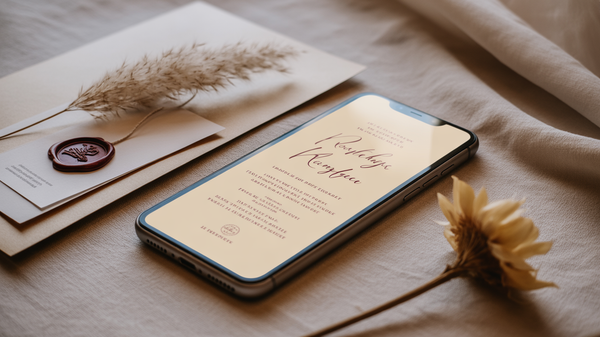
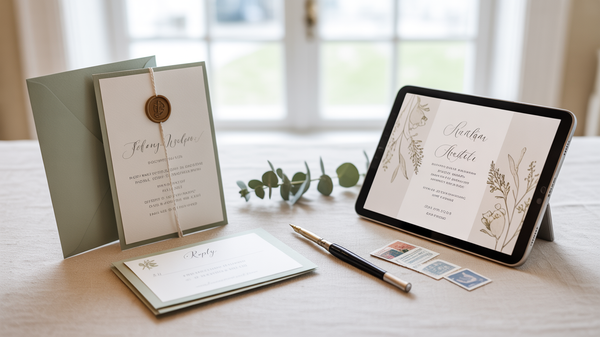
Digital guest management platforms -- built into a web-based wedding invitation ecosystem like Wedwebs -- resolve each of these failure points before the wedding day begins.
When guests RSVP through a digital invitation, the response goes directly into a live dashboard. No transcription, no reconciliation, no three-channel chaos. The headcount updates in real time. The catering team gets an accurate number. The seating logic is built on data that actually reflects who is coming.
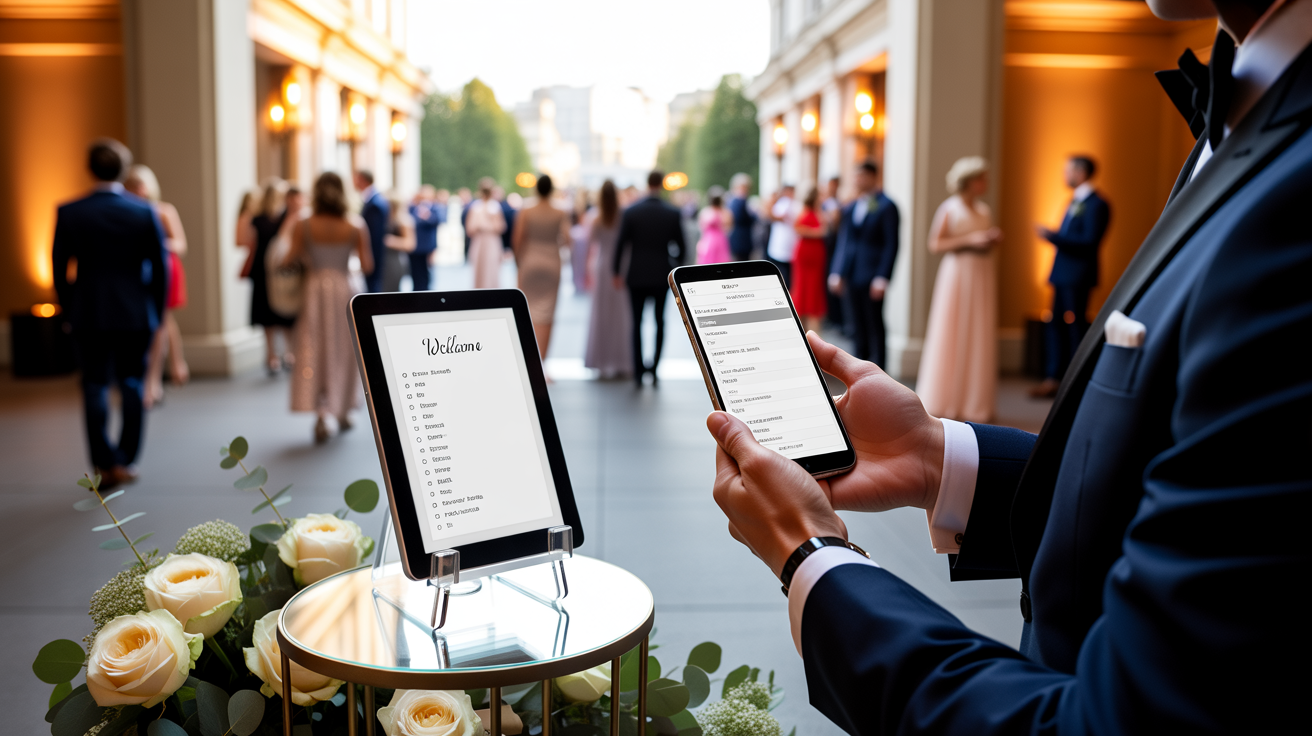
On the day itself, check-in happens through a mobile interface. A team member pulls up the guest list on a phone or tablet, searches a name, confirms arrival with a tap, and the dashboard updates instantly. You know, at any moment, exactly how many guests have checked in, how many are expected but have not arrived, and where every confirmed guest is seated -- without touching a single piece of paper.
When the bride texts you at 6:02 PM asking for an update, you send her a number. A real number. In under fifteen seconds.
What the Other Side Looks Like
Picture the same WO, twelve months later, at a 380-guest event in a hotel ballroom in Dubai. She arrives forty minutes before doors open. She briefs her check-in team of two on the tablet interface. She does a single walkthrough of the room.
When the first guests arrive, there is no clipboard. There is no confusion about whether the Rahimi family is under 'R' or filed under the groom's family section on page three. There is a name search that takes four seconds and a calm, confident handoff to the seating coordinator.
The bride asks for an update at 6:15 PM. The WO sends back: '214 checked in, 166 expected, on track.' The bride stops texting. Not because she stopped caring, but because she feels taken care of.
That feeling -- the one a bride gets when everything is invisible because it is working -- is what a WO's reputation is actually built on. Not the flowers. Not the lighting. The invisible architecture underneath.
If your current guest management process could not survive a 400-guest entrance without paper, it is worth a conversation. Wedwebs builds the digital infrastructure that makes that conversation unnecessary on the day itself -- reach out and let us show you how it fits into your workflow.