The $15,000 Wedding With a Handwritten Seating Chart
Premium fees demand premium systems. This is the story of what happens when a WO's backend doesn't match the experience she's selling -- and what the transformation actually looks like.

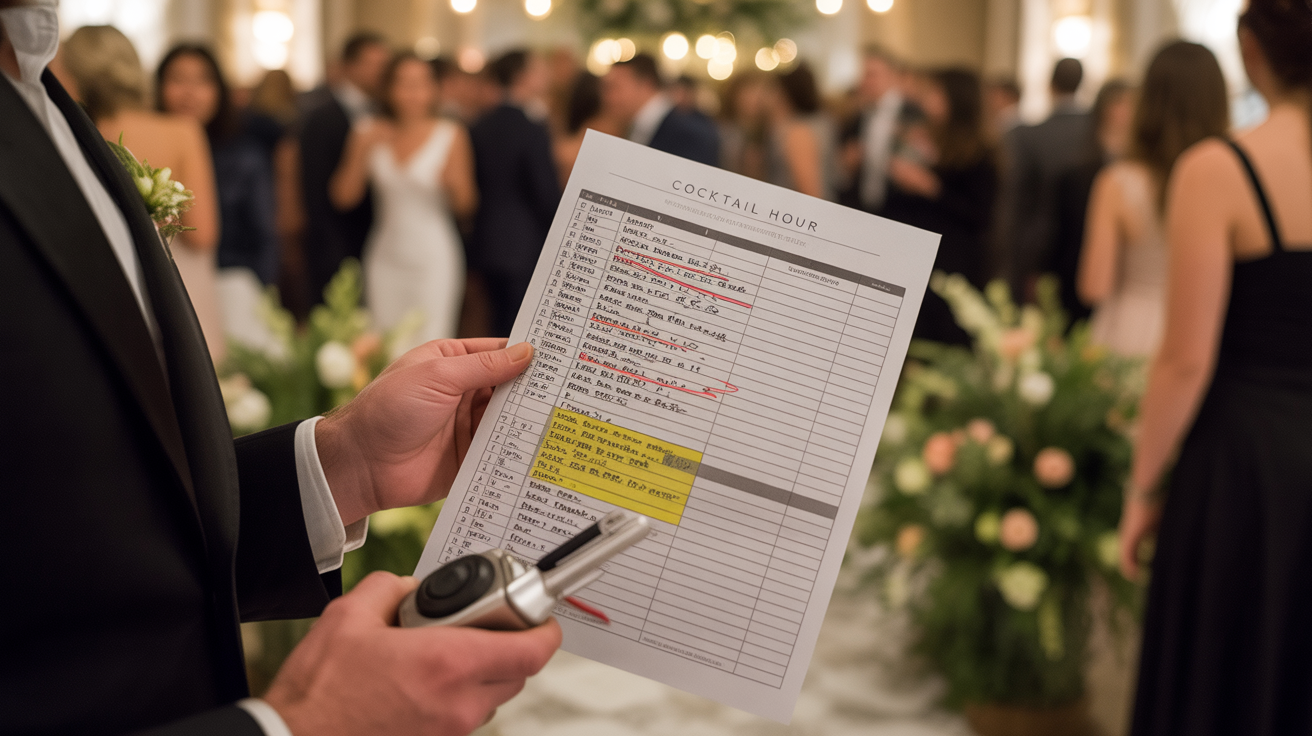
She Charged $15,000. Her Seating Plan Was a Printed Spreadsheet With Handwritten Corrections.
Not a draft. Not a backup. The working document -- the one her coordinator was clutching at the cocktail hour entrance, crossing out names with a ballpoint pen as guests arrived faster than the list could be updated.
This is not a story about a bad wedding organizer. It is a story about a brilliant one who had not yet noticed the gap between the experience she was selling and the system she was running.
The Reputation Was Real. The Infrastructure Was Not.
Her florals had been published. Her venue selections were genuinely considered -- not just 'popular,' but right for each couple's specific story. Her fees reflected years of taste, relationships, and judgment that her clients could not easily replicate by hiring someone cheaper.
But behind the curtain:
- Guest lists lived in an Excel file that three people had edited across six versions.
- RSVPs were collected via WhatsApp messages, then manually transcribed -- usually the night before.
- Dietary restrictions were tracked in a notes column that one coordinator called 'the column we pray over.'
- Seating for 280 guests was finalized on a printed sheet, revised in pen, reprinted twice, and still wrong at the door.
For most of the wedding, none of this was visible. Then, during cocktail hour, a guest arrived whose name had been moved in the most recent revision but not the printed copy. The scramble lasted four minutes. The client's mother watched the whole thing.
Four minutes. After 18 months of flawless vendor management, editorial-quality tablescapes, and a ceremony that ran to the minute.
What Actually Cracked
The problem was not the mistake. Experienced clients know that complex events have friction. The problem was what the mistake revealed: that the premium fee and the premium system were not the same thing.
Clients do not audit your operations. They do not ask to see your workflow or review your coordination software. But they are pattern-matching, constantly, for signals that confirm the price they paid was worth it. A frantic coordinator with a crossed-out paper list is a signal. It is a small one, but it lands in a moment when the client is already emotional, already paying attention, already forming the story they will tell about this wedding for the next decade.
This is what K5 actually costs -- not losing the client in front of you, but losing the referral you never knew you were about to receive.
What the System Transformation Actually Looks Like
The shift is not about software for its own sake. It is about making the invisible infrastructure match the visible experience.
When a WO moves her guest management to a web-based system, the immediate operational gains are real:
- RSVPs sync automatically. No transcription, no version confusion, no 'which file is current.'
- Dietary and seating data is live, accessible from any device, by any coordinator on the team.
- The entrance check-in moves from a paper list to a tablet -- quiet, fast, and visibly composed.
- Last-minute changes (and there are always last-minute changes) update in real time across the entire operation.
But the less obvious gain is the one that matters for premium positioning. When a client or their family glimpses the backend -- even briefly, even accidentally -- what they see confirms the story they already believed about you. A coordinator checking a tablet at the entrance reads as precision. It reads as the kind of operation that charges $15,000 and has earned every dollar.
The experience does not just feel better. It looks right.
Premium Positioning Is a System, Not a Aesthetic
The florals, the venue, the lighting -- these are the parts of premium positioning that WOs invest in obsessively, and rightly so. They are what clients photograph and share and remember.
But premium positioning is only as strong as its weakest visible moment. And the weakest visible moment is almost never the centerpiece. It is the cocktail hour entrance. It is the coordinator's body language when something shifts. It is whether the person managing your guest list looks like they are running a $15,000 operation or a very stressful birthday party.
The WOs who are winning the referral game in competitive markets -- in Dubai, Lagos, Sydney, Toronto -- are not just delivering beautiful events. They are delivering beautiful events that feel systematized at every touchpoint a client can see.
That consistency is not accidental. It is infrastructure.
The Takeaway
If your fees reflect your taste, your relationships, and your judgment, your systems need to reflect the same standard. Not because clients will audit your workflow, but because operational composure is its own form of communication -- and your clients are fluent in it.
Wedwebs works with Wedding Organizers who have already built the reputation. We handle the digital invitation infrastructure and guest management systems that make sure the backend matches the brand. If you want to see what that looks like inside a real WO workflow, let's have a conversation.