Digital Wedding Invitation Etiquette: The Rules Most Couples Are Getting Wrong
Digital invitations have their own etiquette rules -- and most couples are missing them. This guide covers send timing, RSVP windows, follow-up cadence, and the most common mistakes that quietly undermine the guest experience.

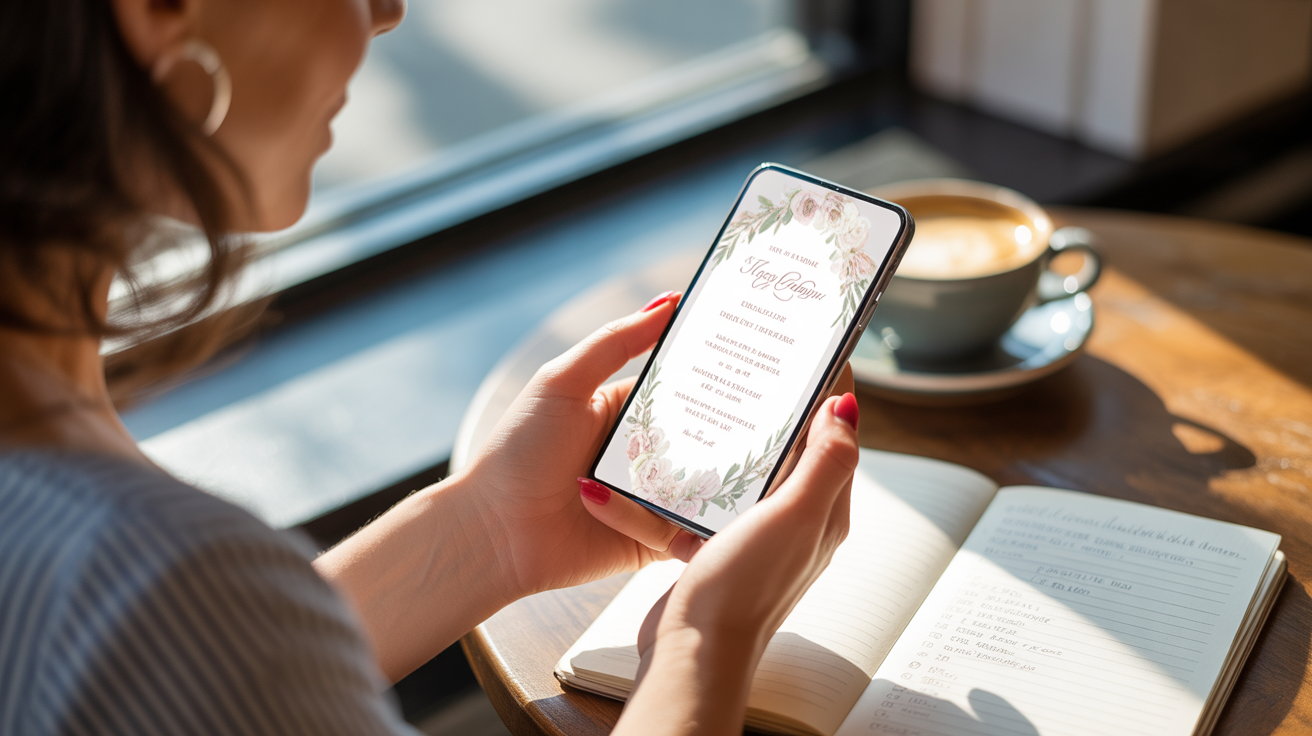
Digital invitations are not paper invitations on a screen. They have their own etiquette -- and most couples are breaking it.
The conventions that governed mailed cardstock for decades -- the save-the-date timeline, the RSVP card with a stamped envelope, the formal wording -- were built around the constraints of physical mail. Digital invitations operate on entirely different mechanics: instant delivery, interactive forms, real-time RSVP tracking, and a guest reading experience that happens on a phone, not at a dining table. Treating them like paper with a different postage cost is where the mistakes begin.
Here is what thoughtful digital invitation etiquette actually looks like.
Send Timing Is Not One-Size-Fits-All
The most common question couples ask is 'when should we send?' The honest answer is: it depends on the complexity your guests are managing.
Use these benchmarks as your framework:
- Local formal weddings: Send 8 weeks before the date. Guests need time to arrange their schedules, plan outfits, and respond -- but not so much time that the invitation gets buried and forgotten.
- Destination weddings: Send 12 to 16 weeks out. You are asking guests to book flights and accommodation. Every week you delay costs them money and increases the chance they decline not from lack of desire but from logistical impossibility.
- Intimate ceremonies (under 30 guests): 4 to 6 weeks is sufficient. Shorter lead times create a sense of intimacy and immediacy that fits the scale of the event.
These timings assume you have already sent a save-the-date for formal and destination events. If you skipped the save-the-date, add 4 weeks to each of the above.
Setting an RSVP Window That Actually Works
The RSVP deadline is one of the most mishandled details in wedding planning. Set it too early and guests resent the pressure. Set it too late and your caterer, venue, and seating coordinator are working with incomplete data the week before the event.
The right window is 3 to 4 weeks before your wedding date. This gives you a clean buffer to chase non-responders, finalize numbers with vendors, and arrange dietary and accessibility accommodations without the stress compressing into the final 72 hours.
State the deadline explicitly inside the invitation -- not just on the RSVP form. Something clear and direct: 'Please respond by [date] so we can finalize arrangements for you.' Guests respond better to specificity than to ambiguity.
The 2-Wave Follow-Up Cadence
Even with a well-set deadline, a portion of your guest list will not respond unprompted. This is not rudeness -- it is the nature of inbox fatigue and busy lives. The solution is a structured follow-up cadence, not anxious messages at irregular intervals.
Wave 1 -- Soft reminder, 2 weeks before the RSVP deadline: A brief, warm message acknowledging that they received the invitation and that you would love to confirm their attendance. Keep the tone light. This is a nudge, not a demand.
Wave 2 -- Firm close, 1 week before the RSVP deadline: Direct and specific. Name the date, name the deadline, and make it easy -- include the RSVP link again. Most platforms that handle digital invitations allow you to filter guests by response status, so you are only sending this to the non-responders, not your entire list.
After Wave 2, if guests still have not responded, a personal message or phone call is appropriate. This is not a failure of your system -- it is the correct escalation path.
Handling Non-Responders Without Damaging Relationships
Chasing people for RSVPs is uncomfortable, but it does not have to be awkward. The framing matters.
Approach non-responders as if you are trying to make things easy for them, not pursuing a correction. 'I want to make sure we have everything arranged for you' lands differently than 'I need your response.' For guests who are genuinely uncertain about attendance, offer a simple out: they can let you know as soon as they are able, and you will do your best to accommodate.
For guests who simply go silent, make a planning decision by your vendor deadline and inform them after the fact. A missed RSVP is not a reason to delay finalizing your catering order.
The Most Common Digital Etiquette Mistakes
These are the errors that quietly undermine the guest experience and, occasionally, create real logistical problems:
- Sending from a personal email address: A wedding invitation arriving from '[email protected]' reads as a forwarded link, not a formal invitation. Use a dedicated address or send through your invitation platform's system so it arrives with visual context.
- No mobile optimization: Over 70% of guests will open your invitation on their phone within the first hour. If the layout breaks on mobile, the RSVP form is difficult to complete, and a portion of guests will abandon it without responding.
- Unclear RSVP instructions: If guests have to search for where to confirm attendance, you will lose responses. The RSVP action should be the most obvious thing on the page.
- Omitting dietary and accessibility fields: These are not optional considerations. A guest who cannot find a place to note a severe allergy or a mobility requirement will either contact you separately -- adding friction -- or attend without flagging a need that you then cannot accommodate.
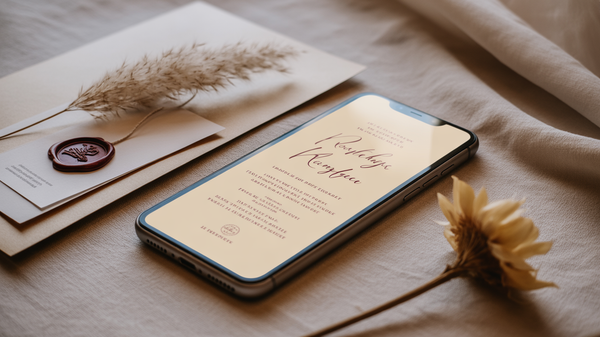
- Sending the invitation URL in a plain text message without context: The first impression matters. The invitation should arrive as an invitation -- beautifully presented, with the couple's names, the date, and a clear opening before the guest is asked to do anything.
The Underlying Principle
Digital invitations, done well, are more functional and more personal than paper. They can carry your full wedding website, manage guest data in real time, and eliminate the lag of physical mail entirely. But they earn that advantage only when the etiquette around them is handled with the same care you would give a hand-addressed envelope.
The format has changed. The intention -- to make every guest feel genuinely seen and welcomed -- has not.
If you want a digital invitation system that handles the timing reminders, RSVP tracking, dietary fields, and follow-up cadences automatically, Wedwebs is built for exactly this. Explore our portfolio or speak with our team to see how it works in practice.