Digital RSVP Etiquette: A Complete Guide for Modern Couples With Global Guest Lists
A step-by-step RSVP framework for couples navigating multi-country guest lists, dietary collection, plus-one etiquette, and automated follow-up reminders. Practical enough to apply this week.

The RSVP Question Nobody Answers Properly
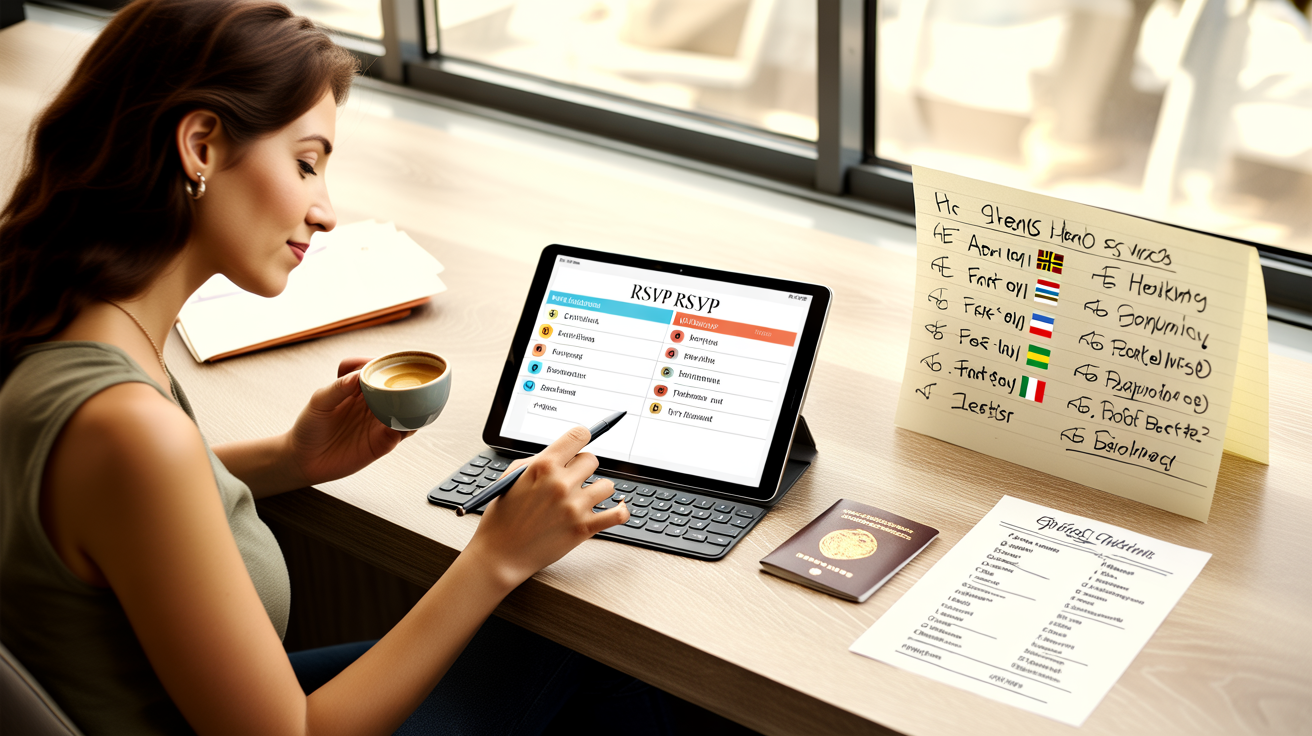
You have 280 guests spread across three countries. Your grandmother in Nairobi expects a phone call. Your university friends in Toronto will ghost a paper card but respond to a link within 48 hours. Your cousins in Dubai need Arabic alongside English. And somewhere in the middle of all this, you need a headcount your caterer can actually work with.
Digital invitations have changed the mechanics of RSVP collection faster than etiquette guides have caught up. This is the framework that actually works.
What to Collect Beyond Yes or No
A binary RSVP form is a missed opportunity. When someone opens your digital invitation, you have exactly one moment to gather the data you will need for the next six months of planning. Build your form to collect:
- Full name of each attending guest -- not just the primary invitee. If you invite a couple, collect both names individually. Seating charts and place cards depend on it.
- Meal preference -- offer 3 options maximum (meat, fish or vegetarian, dietary restriction flag). More than 3 creates decision fatigue and lower completion rates.
- Specific dietary requirements -- a free-text field separate from meal preference. 'Halal only,' 'severe nut allergy,' and 'kosher' are not the same as 'vegetarian.'
- Plus-one details -- if you have extended a plus-one, collect the guest's name at RSVP stage, not at the door. Unnamed plus-ones at check-in create the kind of chaos that ends friendships.
- WhatsApp number or local contact -- critical for multi-country guest lists where email open rates drop below 40% for guests in West Africa and parts of Southeast Asia.
- Travel or accommodation needs (optional flag) -- a simple yes/no checkbox that tells you who to route toward your room block information.
Keep the form completable in under 90 seconds. Anything longer sees a measurable drop-off.
The RSVP Deadline Window
The most common mistake couples make is setting their RSVP deadline too close to the wedding date, then panicking when the caterer needs numbers two weeks earlier than expected.
Work backwards from your vendor deadlines, not your wedding date. The standard framework:
- Final headcount to caterer: typically required 7 to 10 days before the wedding.
- RSVP deadline to guests: set this 3 weeks before the wedding. That gives you a 10 to 14-day buffer to chase non-responders before your vendor deadline hits.
- Send invitations: 6 to 8 weeks before the wedding for domestic guests. 8 to 10 weeks for international guests, particularly those who need visas.
For weddings with guests crossing time zones -- Lagos to London to Los Angeles -- the 8-week send window is non-negotiable. People booking flights need runway.
How to Send Reminders Without Damaging Relationships
Reminders feel awkward because most people approach them as a single aggressive nudge. The better model is a three-touch cadence with decreasing formality.
Touch 1 -- 2 weeks before your RSVP deadline: An automated reminder sent through your invitation platform. Tone is warm and informational: 'We would love to finalize our arrangements and want to make sure you have a chance to respond.'
Touch 2 -- 3 days before your RSVP deadline: A shorter, lighter nudge to remaining non-responders only. Do not message everyone -- only those who have not responded. 'Just a small reminder that our RSVP window closes on [date].'
Touch 3 -- Personal outreach: For guests who still have not responded 48 hours after your deadline, this is where you or a trusted family member picks up the phone. Not a WhatsApp message -- a call. Reserve this effort for guests you genuinely cannot finalize seating or catering without.
Never send a group broadcast reminder. Guests who already responded see it as sloppy. Guests who have not responded feel publicly called out.
Handling Late Responses and Plus-One Etiquette
Late RSVPs are inevitable. The pragmatic approach: close your digital form on the deadline, but keep a manual override process for responses that come in within the 72-hour window after closing. Anything beyond 72 hours post-deadline is a confirmed 'no' for catering and seating, even if that guest later shows up.
For plus-ones specifically, the digital context gives you cover to enforce structure politely. Your RSVP form can include a note: 'Your invitation includes [X] guests. Please enter the name of your guest below.' This makes it clear that an unnamed plus-one is not an automatic option, without requiring an awkward conversation.
For cultures where it is common for guests to bring uninvited family members -- common across many South Asian, Middle Eastern, and West African wedding traditions -- build a 5 to 8% buffer into your catering order and pre-assign a hospitality host who can manage walk-ins graciously at the entrance without disrupting the coordinator.
Your RSVP Communication Timeline
Here is the complete framework you can apply immediately:
- 10 weeks out: Finalize guest list, assign plus-one allowances, set your RSVP form fields.
- 8 weeks out: Send digital invitations (add 2 weeks if guests need visas).
- RSVP deadline: 3 weeks before wedding day.
- 2 weeks before deadline: Automated Reminder 1 to all non-responders.
- 3 days before deadline: Automated Reminder 2 to remaining non-responders.
- Deadline day: Close the form. Export your data.
- Deadline + 72 hours: Manual review window for late stragglers.
- 10 to 14 days before wedding: Submit final headcount to caterer with your buffer factored in.
This timeline works whether you have 80 guests in Sydney or 400 guests split between Dubai, Jakarta, and Toronto.
The Part That Usually Falls Apart
The framework above is logical. Executing it while managing venue logistics, vendor negotiations, and family dynamics is where things unravel. Tracking who responded, who did not, who requested halal, and whose plus-one name never came through -- that is a full-time administrative task buried inside your wedding planning.
Wedwebs automates the entire follow-up sequence from your RSVP deadline back to invitation send, flags missing dietary data, and consolidates your guest data into a clean export your caterer or planner can use directly. No spreadsheet archaeology at 11pm the week before your wedding.
If you want to see how the system works for a cross-country or cross-continental guest list, the Wedwebs team is available to walk you through a setup tailored to your specific guest profile.